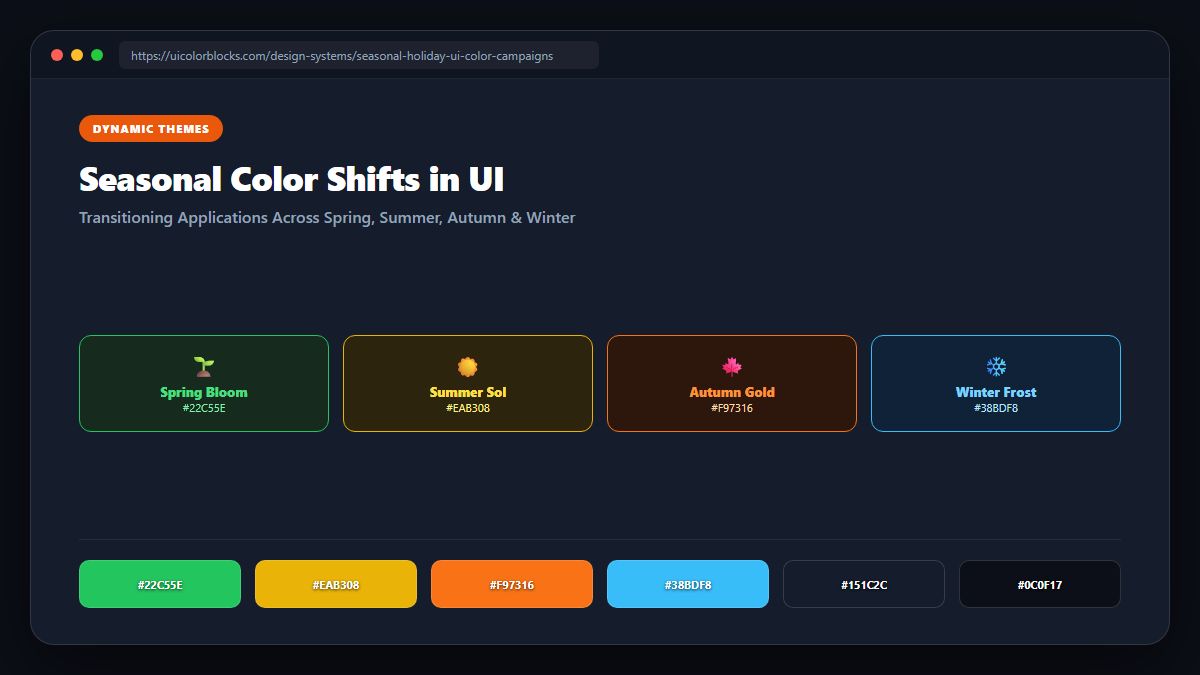
1. The Four-Season Chromatic Framework
Each season carries distinct cultural and emotional resonance. Spring emphasizes fresh greens and blossom pinks; Summer brings sunlit golds and pool cyans; Autumn introduces earthy ambers and rust crimsons; Winter cools down into deep pines, silvers, and berry reds.
/* Dynamic Seasonal Theme Switching via Data Attribute */
[data-season="spring"] {
  --seasonal-accent: #10b981;  /* Fresh leaf emerald */
  --seasonal-subtle: #fce7f3;  /* Cherry blossom tint */
}
[data-season="summer"] {
  --seasonal-accent: #0284c7;  /* Deep ocean blue */
  --seasonal-subtle: #fef08a;  /* Warm solar gold */
}
[data-season="autumn"] {
  --seasonal-accent: #ea580c;  /* Warm pumpkin orange */
  --seasonal-subtle: #fef3c7;  /* Harvest amber tint */
}
[data-season="winter"] {
  --seasonal-accent: #0284c7;  /* Frosted glacier cyan */
  --seasonal-subtle: #e0f2fe;  /* Crisp ice blue */
}
2. The Rule of Invariant Structure
When introducing seasonal shifts, never alter core structural tokens: page canvases, text colors, and primary form inputs must remain untouched. Seasonal colors belong exclusively to hero banners, decorative pill badges, and marketing headers.
| Season | Hero Highlight | Holiday Accent | Target UI Layer |
|---|---|---|---|
| Spring (Q1) | Leaf Green (#10b981) | Blossom Pink (#ec4899) | Promo pills, illustrations |
| Summer (Q2) | Solar Amber (#f59e0b) | Pool Cyan (#06b6d4) | Hero badges, CTA buttons |
| Autumn (Q3) | Cider Orange (#ea580c) | Cranberry (#be123c) | Sale banners, product highlights |
| Winter (Q4) | Midnight Pine (#064e3b) | Silver Frosted (#94a3b8) | Year-in-review modals |
3. Automated Seasonal Detection via JavaScript
Frontends can automatically inspect the current calendar month and attach data-season to the root element, giving users an organic, contextual surprise when they visit your site during holiday months.
4. Summary Best Practices for Dynamic Seasonal UI
Never compromise accessibility for holiday flair. Verify all seasonal banner combinations with our WCAG Contrast Guide and explore seasonal palettes in our Palettes collection.
5. Implementation Blueprint & Token Architecture
Translating theoretical color principles into production code requires consistent design token binding. When engineers hardcode ad-hoc hexadecimal values directly inside component CSS classes, theme parity breaks down and maintaining accessibility becomes an ongoing liability. By adopting disciplined semantic variables, your frontend application can swap themes, adapt to high-contrast operating system preferences, and enforce strict accessibility thresholds across every viewport.
When architecting your color tokens, establish an invariant rule: UI components must consume semantic tokens rather than raw primitives. This abstraction layer ensures that updating your brand identity or adjusting dark mode surface elevations requires changing values in a single centralized design token stylesheet rather than executing search-and-replace across thousands of individual CSS or JSX files.
/* Centralized Design Token Integration Blueprint */
:root {
  --color-canvas-base: #f8fafc;
  --color-surface-card: #ffffff;
  --color-border-subtle: rgba(0, 0, 0, 0.08);
  --color-text-primary: #0f172a;
  --color-text-muted: #64748b;
  --color-interactive-primary: var(--brand-500);
  --color-interactive-hover: var(--brand-600);
}

[data-theme="dark"] {
  --color-canvas-base: #080810;
  --color-surface-card: #16162a;
  --color-border-subtle: rgba(255, 255, 255, 0.08);
  --color-text-primary: #f0f0fa;
  --color-text-muted: #a0a0c0;
  --color-interactive-primary: var(--brand-400);
  --color-interactive-hover: var(--brand-500);
}
For frontend engineering teams using modern utility-first CSS frameworks like Tailwind CSS, export your verified semantic tokens directly into your tailwind.config.js file. This creates autocompleted utility classes such as bg-surface-card and text-interactive-primary, ensuring developers build accessible, harmonious interfaces without leaving their editor.
Put These Tokens into Practice
Explore our interactive design tools to test contrast ratios, generate 50–950 shade steps, or discover harmonious color palettes.